


Introducing 10 Case Studies of Multicultural Coexistence Initiatives

As the number of residents with foreign roots grows, local governments across Japan are recognizing the increasing importance of "multicultural coexistence" (Tabunka Kyosei).
However, many people might still wonder, "What kind of initiatives are actually being implemented?"
This article introduces specific, real-world examples of multicultural coexistence in an easy-to-understand manner. By exploring these practical cases—ranging from communication support and disaster prevention to community exchange—you will discover how multicultural coexistence is closer to our daily lives than it may seem.
目次
- 1 A Wide Variety of Multicultural Coexistence Initiatives
- 2 10 Selected Examples of Multicultural Coexistence Initiatives
- 3 Theme ① Communication Support
- 4 Theme ② Education & Employment Support in Japan
- 5 Theme ③ Support for Emergencies
- 6 Theme ④ Community Participation
- 7 Promoting Multicultural Coexistence in Kyotamba Town
- 8 Multicultural Coexistence Initiatives in Kyotamba Town
- 9 Summary
A Wide Variety of Multicultural Coexistence Initiatives
Initiatives for multicultural coexistence are broadly developed to meet the specific needs of each region and its residents.
Because challenges arising from differences in language and culture span across various aspects of life—including daily living, education, employment, and disaster prevention—tailored and concrete support is essential.
Commonly implemented examples include Japanese language learning support, the establishment of daily life consultation desks, and community exchange events. These initiatives play a vital role not only in creating a secure environment where foreign residents can live peace of mind, but also in revitalizing the entire local community.
What is "Multicultural Coexistence"?
Multicultural coexistence refers to a society where people of different nationalities, ethnicities, and cultural backgrounds acknowledge their mutual differences and live together as equals.
It goes beyond simple coexistence; it is about deepening mutual understanding and cooperating with one another. With the influx of foreign residents in Japan, the need for multicultural coexistence is greater than ever. To minimize friction caused by differences in language and lifestyle habits, and to build a community where everyone can live safely, local governments, community organizations, and residents must work hand in hand.
For a detailed look at why this is necessary, please refer to the following article:
Why Is Multicultural Coexistence Important?
10 Selected Examples of Multicultural Coexistence Initiatives
Multicultural coexistence initiatives are being practiced in various forms throughout Japan. This article highlights 10 representative case studies, categorized into four key themes.
| Theme | Initiatives & Case Studies |
| ①Communication Support | 1.Ensuring government information reaches residents with foreign roots |
| 2.Promoting Japanese language education | |
| 3.Hosting orientation sessions about daily life in Japan | |
| ②Education & Employment Support | 4.Securing educational opportunities for children |
| 5.Supporting employment and career stability in Japan | |
| ③Support for Emergencies | 6.Building mutual-aid systems for disasters |
| 7.Ensuring access to medical services during illness or injury | |
| 8.Delivering accurate information during infectious disease outbreaks | |
| ④Community Participation | 9.Distributing awareness-raising videos on multicultural coexistence |
| 10.Creating spaces where people of diverse backgrounds can gather |
Let's take a closer look at each of these initiatives.
Theme ① Communication Support
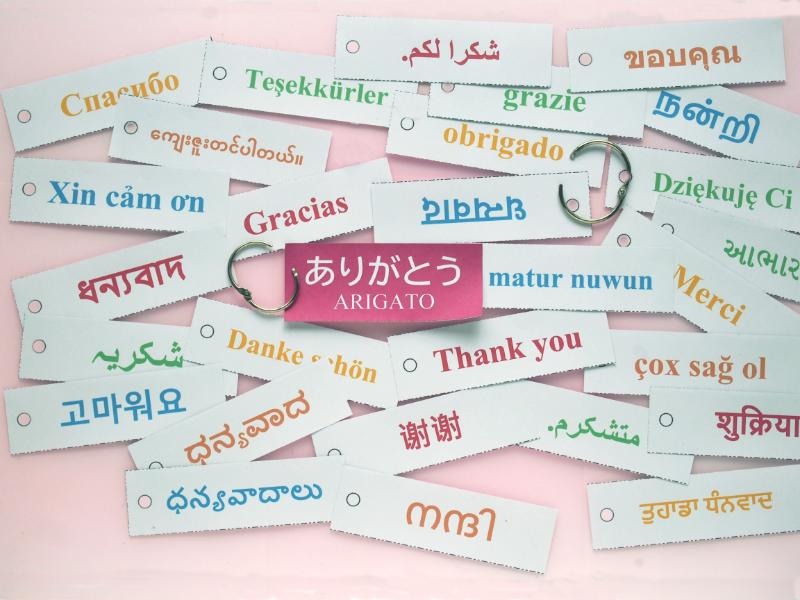
To overcome the barriers of language and culture, appropriate communication support is indispensable. In particular, whether vital information from local governments is accurately conveyed directly impacts the safety and security of residents' lives.
First, we look at multicultural coexistence initiatives practiced in Fukushima and Okayama Prefectures under the theme of "Communication Support."
1.Ensuring government information reaches residents with foreign roots
While it is crucial that daily life information from local governments reaches all residents equally, differences in language and media accessibility often prevent this information from reaching those with foreign roots.
Therefore, local governments need to utilize multilingual notation (such as Chinese and Vietnamese), adopt "Easy Japanese" (Yasashii Nihongo), and broadcast information via social media channels favored by foreign residents.
Case Study: Fukushima Prefecture Fukushima Prefecture previously operated a telephone consultation desk for foreign residents, which also handled COVID-19 inquiries. However, technical trainees and international students who did not own landlines or standard phone plans could not access it.
To solve this, the prefecture introduced a consultation system via a popular social media app, making it accessible with just a smartphone. This successfully expanded the support framework to reach more individuals with foreign roots.
Source: Ministry of Internal Affairs and Communications (MIC) Multicultural Coexistence Case Studies
2.Promoting Japanese language education
For individuals with foreign roots, a limited proficiency in Japanese poses a major challenge in daily life, employment, and building relationships within the community. In a multicultural society, establishing an environment where everyone can learn Japanese at their own pace and level is considered essential.
Japanese language classes and volunteer support do more than teach a language; they serve as spaces for intercultural exchange, helping newcomers build deeper bonds with local residents.
Case Study: Soja City, Okayama Prefecture Following the global financial crisis (the Lehman Shock), Soja City saw a rise in foreign residents facing financial hardship, with many having no one to turn to. To address this, the city launched multicultural initiatives aimed at "building relationships with a human face."
In response to requests from foreign residents, the city opened Japanese language classes where locals and foreign residents could interact, thereby offering both daily life support and a space for communication.
Source: MIC Multicultural Coexistence Case Studies
3.Hosting orientation sessions about daily life in Japan
Japan's unique local rules and systems can be confusing for residents with foreign roots, who often struggle with trash disposal methods or administrative procedures. Furthermore, a lack of information regarding major life events—such as childbirth, education, and eldercare—makes long-term life planning difficult.
Conducting orientation sessions and seminars to pass on essential daily life knowledge is another vital initiative.
Case Study: Aichi Prefecture As more foreign residents began settling in Aichi Prefecture long-term, a lack of information regarding life planning emerged as a pressing issue.
In response, the prefecture compiled a "Life Planning Support Guidebook for Foreign Residents," outlining essential information tailored to various life stages, including housing, education, and retirement. By clearly explaining necessary procedures and systems, the prefecture is fostering an environment where residents can live with peace of mind.
Source: MIC Multicultural Coexistence Case Studies
Theme ② Education & Employment Support in Japan

For residents with foreign roots to lead stable lives in the community, education and employment support are vital. Because language barriers and systemic differences can make it difficult to access these opportunities, local communities and governments must establish robust support systems.
4.Securing educational opportunities for children
Children with foreign roots often face difficulties communicating with peers and understanding school lessons due to limited Japanese language skills or differing cultural backgrounds. Furthermore, children without Japanese nationality may sometimes fall outside the scope of compulsory education, leading to concerns over a lack of adequate schooling opportunities.
As a result, initiatives such as after-school programs and learning support are heavily required to secure these learning opportunities.
Case Study: Miyagi Prefecture In Miyagi Prefecture, the "Support Society for Children of Foreign Nationalities" takes the lead in providing one-on-one support for Japanese language and academic subjects.
By offering tailored assistance so that even children with limited Japanese can understand, the organization prevents learning gaps and cultivates an environment that nurtures the skills needed to thrive in society.
Source: MIC Multicultural Coexistence Case Studies
Reference:Support Society for Children of Foreign Nationalities
5.Supporting employment and career stability in Japan
For individuals with foreign roots to secure stable employment in Japan, they must overcome not only language and systemic barriers, but also a lack of career advancement opportunities. Young people, in particular, often find it difficult to make informed choices about higher education or career paths, leaving them stuck in unstable employment.
Some municipalities are actively building environments that enable long-term employment by offering life-planning support and corporate matchmaking.
Case Study: Kani City, Gifu Prefecture Kani City faced an issue where many young foreign residents remained trapped in temporary or dispatch employment, leading to job instability. Meanwhile, local businesses were struggling with labor shortages but felt uneasy about hiring foreign workers.
To bridge this gap, the local international association stepped in to provide young residents with opportunities to map out their life plans, while simultaneously assisting them in securing employment at local companies. This initiative aims to balance stable employment with the revitalization of local industry.
Source: MIC Multicultural Coexistence Case Studies
Theme ③ Support for Emergencies
In a disaster-prone country like Japan, advancing disaster preparedness from a multicultural perspective is paramount. To realize a community where everyone can live safely, proactive measures for "times of crisis" are indispensable.
6.Building mutual-aid systems for disasters
During disasters, language barriers can prevent evacuation information from being accurately understood. For individuals unfamiliar with Japanese, the technical language used in emergency broadcasts is particularly difficult, leading to high anxiety regarding evacuation procedures and shelter life.
Therefore, it is vital to convey disaster preparedness knowledge clearly and establish mutual-aid systems within the community.
Case Study: Kusatsu City, Shiga Prefecture Kusatsu City faced challenges regarding how to respond to foreign residents with limited Japanese proficiency during emergencies. Recognizing the language skills and cultural insights of international students, the city formed Japan's first specialized volunteer fire corps consisting entirely of foreign nationals. This enables multilingual evacuation guidance and support, fostering a framework where the entire community can help one another during a disaster.
Source: MIC Multicultural Coexistence Case Studies
Reference:Japan's First Foreign Volunteer Fire Corps: Exploring the Potential of Specialized Members
7.Ensuring access to medical services during illness or injury
An inability to understand Japanese becomes a major barrier when visiting medical institutions.
Patients may struggle to accurately convey their symptoms or pain, which can prevent them from receiving appropriate treatment.
Consequently, arranging medical interpretation systems is a vital component of multicultural coexistence.
Case Study: Kanagawa Prefecture Triggered by communication gaps between medical staff and foreign patients, Kanagawa Prefecture received a proposal emphasizing the need for medical interpreters. A dedicated committee was established, leading to a pilot project for dispatching medical interpreters.
Today, a system is firmly in place to send interpreters to medical institutions, ensuring that residents with foreign roots can access healthcare with confidence.
Source: MIC Multicultural Coexistence Case Studies Reference: Guide to Medical Interpreter Dispatch — MIC Kanagawa
Source: MIC Multicultural Coexistence Case Studies
Reference:Guide to Medical Interpreter Dispatch — MIC Kanagawa
8.Delivering accurate information during infectious disease outbreaks
During crises like the COVID-19 pandemic, fast and accurate information is critical. However, language differences often isolate foreign residents from these vital updates. It is essential to create multilingual content and easily digestible formats so that everyone can take appropriate preventive measures.
Case Study: Hamamatsu City, Shizuoka Prefecture While Hamamatsu City needed to spread awareness of virus prevention measures among its foreign residents, it found that one-way administrative announcements were insufficient. In response, the city collaborated with local foreign communities to produce an awareness video titled "Hamamatsu United Against Covid-19!" By involving foreign residents directly in the messaging, the city effectively promoted infection prevention measures throughout the community.
Source: MIC Multicultural Coexistence Case Studies
Theme ④ Community Participation
To foster true multicultural coexistence, it is not enough to support only those with foreign roots; raising awareness and understanding among Japanese residents is equally vital. By learning about and respecting each other's cultures and values, a better local society can be built.
9.Distributing awareness-raising videos on multicultural coexistence
To promote a harmonious society, the Japanese community must also deepen its understanding. A lack of knowledge or experience regarding different cultures and religions can sometimes give rise to prejudice or bias. To integrate multicultural concepts into daily life, initiatives are underway to provide educational resources for Japanese citizens.
Case Study: Tokyo Metropolitan Government Aiming to eliminate discrimination and prejudice against foreign nationals, the Tokyo Metropolitan Government produced and published online video content focused on human rights and multicultural coexistence. By making these educational tools easily accessible to anyone, Tokyo is encouraging an understanding of cultural diversity and building a society rooted in mutual respect.
Source: MIC Multicultural Coexistence Case Studies
Reference:Human Rights Issues in Tokyo Through Videos
10.Creating spaces where people of diverse backgrounds can gather
Continuous, everyday interaction is essential for multicultural coexistence. However, one-off events often lead to temporary interactions that fail to foster long-term relationships. Therefore, there is a strong need for community hubs where anyone can drop by and mingle naturally.
Case Study: Aichi Prefecture Addressing the issue that traditional events tend to be transient, Aichi Prefecture launched "World Smile Garden," a permanent hub where local residents can gather routinely. By providing a space for continuous interaction between Japanese and foreign residents, the initiative deepens multicultural understanding and fosters roots-based community connections.
Source: MIC Multicultural Coexistence Case Studies
Reference:What is World Smile Garden? | Kariya City Official Website
Promoting Multicultural Coexistence in Kyotamba Town
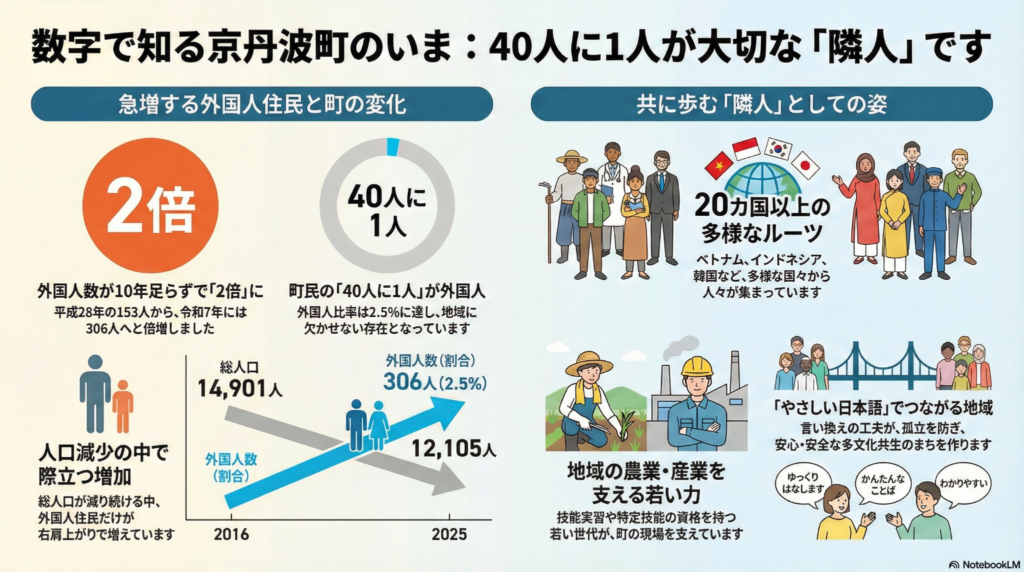
Out of a total population of 12,105, Kyotamba Town is home to 306 residents with foreign roots (as of December 2025). This means approximately 1 in 40 residents has a foreign background. Among these 306 residents, Vietnamese nationals make up the largest percentage, followed by Indonesian and Korean nationals.
Kyotamba Town is actively pursuing multicultural coexistence initiatives to build a community where both foreign-born and Japanese residents can live together safely and harmoniously.
Through grassroots activities such as volunteer-run Japanese language classes, cultural exchange events, and disaster preparedness training, the town is creating an environment where everyone can participate as a valued member of society. These efforts extend beyond merely supporting foreign nationals; they play a crucial role in strengthening the social fabric of the entire region.
Multicultural Coexistence Initiatives in Kyotamba Town
Kyotamba International Exchange Association conducts various activities to broaden the understanding of multicultural coexistence, including "Easy Japanese" workshops and community exchange events. In the "Easy Japanese" workshops, participants learn how to use simplified Japanese phrases that are easy for non-native speakers to understand, thereby improving the quality of daily communication. Additionally, the association hosts a "Disaster Preparedness Sports Day" (Bosai Undo-kai), where Japanese and foreign residents exercise together while learning about disaster safety, fostering relationships that ensure mutual aid in times of crisis.
By utilizing multilingual information distribution, active social media outreach, and regular exchange events, the Kyotamba Town International Association continues to break down language and cultural barriers to build a town where everyone can live with peace of mind. For more details, please visit the official website:
Link: Kyotamba International Exchange Association Official Website
Summary
Initiatives for multicultural coexistence span a wide range of fields, including language support, education, employment, disaster prevention, and community exchange. The common thread running through all these efforts is the attitude of "understanding differences and supporting one another." The realization of a multicultural society depends heavily not just on governments and organizations, but on the awareness and actions of each and every one of us.
As seen in Kyotamba Town, community-focused initiatives are expanding all over Japan. We invite you to start by taking an interest in what is happening around you and engaging in whatever way you can.
関連記事
-
How Can We Build a Community Where People from International Backgrounds Can Live Together? A Roadmap and What We Can Do
Learn what multicultural coexistence with people with international backgrounds means, why it matters, and what we can do in our daily lives to build an inclusive community.
-
What is a Local Japanese Language Class? From Learning Content to Volunteer Opportunities
A local Japanese language class is a space where residents with foreign roots learn Japanese and essential daily life information. This article explains the differences from private language schools, learning materials, attendee backgrounds, and how to participate as a volunteer.
-

Why Is Multicultural Coexistence Important?
Explaining the benefits of multicultural coexistence based on Japan's current situation, including declining birth rates, an ageing population, and the increase in foreign-born workers. We also introduce Kyoto Prefecture's multicultural initiatives and actions that can be taken locally.

Click here for our other SNS
-
Facebook

-
X

-
LINE

-
Youtube