


What is a Local Japanese Language Class? From Learning Content to Volunteer Opportunities

For people with foreign roots living in local communities, the Japanese language is an essential foundation supporting daily life—from work and shopping to visiting hospitals, interacting with schools, and completing paperwork at local government offices. However, even when individuals have a strong desire to learn, many feel anxious due to a lack of accessible learning spaces or a lack of nearby people they can talk to or consult with.
One of the key spaces supporting these residents is the local Japanese language class organized by NPO organizations, international associations, and local groups. In these classes, participants learn not only everyday conversation, reading, and writing, but also practical lifestyle information, Japanese culture, and regional customs. Furthermore, many classes welcome local Japanese residents to join as volunteers, serving as an accessible entry point for multicultural coexistence that connects foreign-born residents with the wider community.
This article provides a clear, comprehensive overview of local Japanese language classes: what they are, what is taught, who attends, the vital role they play in the community, and how you can join as a volunteer.
目次
- 1 What is a Local "Japanese Language Class"?
- 2 Why Are Local Japanese Language Classes Necessary?
- 3 What Do Participants Learn in a Japanese Language Class?
- 4 Who Attends Local Japanese Language Classes?
- 5 The Vital Role Played by Local Japanese Language Classes
- 6 Can Japanese Residents Participate Too?
- 7 Language Classes are the Gateway to Multicultural Coexistence
- 8 Kyotamba International Exchange Association Hosts Japanese Language Classes for Multicultural Coexistence
- 9 Conclusion
What is a Local "Japanese Language Class"?
A local Japanese language class is a community space designed for residents with foreign roots to learn Japanese while deepening their connections with society.
In addition to learning everyday conversation and essential vocabulary, participants gain opportunities to access critical information directly tied to daily living, such as navigating healthcare, school systems, local administration, and disaster preparedness.
These classes serve a dual purpose: they provide vital support to ensure foreign residents can live with peace of mind, while acting as a doorway to multicultural coexistence where all community members can understand each other's cultures and perspectives as equals.
Key Differences from Private Japanese Language Schools
Private Japanese language schools (Nihongo Gakko) are formal educational institutions designed for systematic language learning aimed at higher education or career advancement. Classes are taught by certified Japanese language teachers, and students are generally required to pay tuition fees.
On the other hand, local Japanese language classes run by NPOs and international associations rely on local community members as learning supporters. They are usually free of charge or available at a very low cost. Their defining feature is a flexible curriculum focused on practical, lifestyle-based Japanese tailored to the specific levels and needs of the learners.
Because local volunteers are actively involved, these classes also serve as a reassuring environment where learners can meet approachable people to consult with about daily life.
Why Are Local Japanese Language Classes Necessary?
Local Japanese language classes are indispensable for ensuring that residents with foreign roots can live safely and comfortably as valued members of the community.
The primary reasons why these local classes are so important include:
- The growing number of local residents with foreign roots
- Japanese serving as the foundation of daily life
- Building connections with the local community
Let's examine each of these reasons in detail.
The Growing Number of Local Residents with Foreign Roots
In recent years, the number of foreign-born residents living across various regions in Japan has steadily increased due to employment, marriage, and other life events. Among them, many hold a strong desire to "be able to use more Japanese" or "work using the Japanese language."
Local Japanese language classes support these proactive ambitions by offering opportunities to master the Japanese needed for daily routines and workplaces. Gaining language skills builds self-confidence, making it easier for residents to participate in local living and working environments.
Japanese Serving as the Foundation of Daily Life
Living in Japan requires navigating language across every aspect of daily life. Understanding Japanese provides a sense of security during administrative procedures at city hall, medical appointments, school notices, emergency disaster updates, shopping, and workplace interactions.
Rather than focusing solely on textbook grammar and vocabulary, local classes teach practical expressions and community-specific information used in real life. Deepening language comprehension empowers learners to ask for help when facing difficulties and to express their own thoughts clearly.
Building Connections with the Local Community
Japanese language classes function as both a learning space and a social hub where foreign residents can meet locals and build meaningful connections.
For foreign-born residents, having familiar acquaintances nearby whom they can talk to and confide in offers immense peace of mind. For local Japanese residents, participating in classes provides an organic opportunity to learn about different cultures and lifestyles. As community members get to know one another, mutual anxieties and misunderstandings diminish, fostering a supportive environment where neighbors naturally help each other.
What Do Participants Learn in a Japanese Language Class?
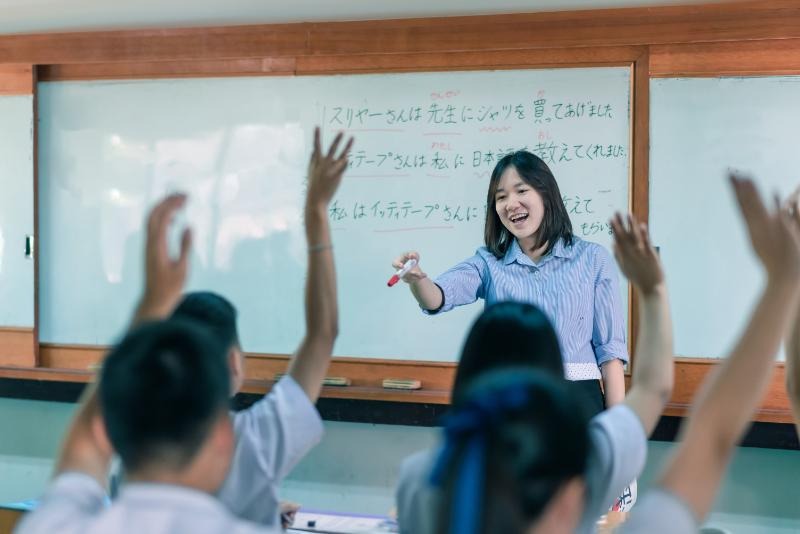
Rather than adhering strictly to rigid academic textbooks, local Japanese language classes cover a broad spectrum of vocabulary and practical information required for daily living. Depending on the learners' language proficiency and life situations, classes focus on practical topics such as everyday conversation, reading and writing, workplace phrases, and navigating city hall or medical facilities.
Below is a detailed look at what is typically taught in these classes:
Daily Conversation, Reading, and Writing
In daily conversation practice, learners master expressions immediately applicable to real life, such as greetings, self-introductions, shopping, asking for directions, and making phone calls. For reading and writing, activities range from basic exercises in hiragana, katakana, and kanji to practicing how to read local bulletin boards, official notices, and application forms.
Simply becoming able to read "Easy Japanese" (Yasashii Nihongo) written in hiragana and katakana enables learners to check community information independently, leading to smoother administrative procedures and daily communication.
Related Article: What is "Easy Japanese"? Learn How to Use It to Support Multicultural Coexistence
Essential Daily Life Information
Alongside language acquisition, local classes frequently incorporate vital lifestyle information.
Examples include:
- How to visit and navigate a hospital
- Local garbage sorting and disposal rules
- Notices and letters from schools and daycares
- Disaster preparedness and emergency information
- Traffic rules and public transportation etiquette
Without Japanese proficiency, these topics can be difficult to navigate, leading to anxiety or unintentional misunderstandings.
By addressing these practical themes directly in class, learners gradually acquire the knowledge needed to navigate local systems independently.
Japanese Culture and Local Customs
Classes also offer opportunities to learn about Japanese culture and regional customs. Learners gain insights into the cultural context behind language, including seasonal events, local festivals, New Year traditions, proper greetings, and cultural attitudes toward time and commitments.
Crucially, these classes are not spaces for unilaterally imposing Japanese customs. Instead, emphasis is placed on mutual sharing, where learners are encouraged to talk about their own home cultures and traditions. Discovering each other's differences fosters natural, respectful communication within the neighborhood.
Conversation Practice
A primary focus of local classes is practicing spoken communication. Beyond memorizing vocabulary and grammar rules, learners engage in continuous conversational exchange—expressing their feelings, asking questions when confused, and listening and responding to others.
Through role-playing and group activities, participants simulate real-life scenarios in hospitals, workplaces, schools, and community events. Experiencing language learning in a safe, reassuring environment where "it is completely okay to make mistakes or not understand" builds the confidence needed to speak Japanese in everyday life.
Who Attends Local Japanese Language Classes?
A diverse group of people attends local Japanese language classes, including foreign nationals working in Japan, international students, individuals married to Japanese citizens, and foreign-born parents raising children in the community.
Their motivations for learning vary widely: some wish to use Japanese at work or pass the Japanese Language Proficiency Test (JLPT), while others want to chat with neighbors, read school notices sent to their children, or navigate medical and government appointments without stress. Classes accommodate a wide range of ages, nationalities, and language levels, offering tailored learning aligned with each individual's daily life.
The Vital Role Played by Local Japanese Language Classes
Local Japanese language classes fulfill several key roles within a community:
- Providing Japanese learning opportunities for residents with foreign roots
- Preventing the social isolation of foreign-born residents in the community
- Supporting regional multicultural coexistence
A central feature of these classes is that they are not merely places where Japanese is "taught," but collaborative spaces where learners and local residents learn from each other.
Providing Japanese learning opportunities for residents with foreign roots
Local classes offer an accessible, nearby learning option for residents with foreign roots. For individuals who cannot attend private language schools due to a lack of nearby institutions, demanding work schedules, childcare responsibilities, or financial constraints, local community classes are far easier to join.
For individuals who cannot attend private language schools due to a lack of nearby institutions, demanding work schedules, childcare responsibilities, or financial constraints, local community classes are far easier to join.
Offering instruction tailored to individual proficiency levels allows learners to study at their own pace and build confidence step by step.
Living in a community without adequate Japanese skills can leave individuals unable to access essential information or find someone to consult when facing trouble. Local language classes serve as a welcoming sanctuary that prevents foreign residents from becoming isolated.
By increasing the number of familiar faces they meet at class, learners gain the reassuring feeling that "there are people here I can talk to and confide in." The human connections formed alongside language learning serve as a vital pillar for peaceful community living.
Supporting regional multicultural coexistence
Local Japanese language classes form an essential foundation for advancing multicultural coexistence. As foreign residents learn Japanese, they understand community announcements more easily and feel empowered to join local events and civic activities. For Japanese residents, interacting in class offers valuable opportunities to learn about their neighbors' personalities, cultures, and viewpoints.
Expanding relationships rooted in mutual understanding and respect creates a welcoming, accessible community environment not just for foreign residents, but for everyone.
Related Article: Why Is Multicultural Coexistence Important?
Can Japanese Residents Participate Too?
Yes, local Japanese residents can frequently join these classes as volunteer learning supporters. Volunteers do not need professional Japanese teaching qualifications. There are numerous ways to contribute within your comfort level, such as acting as a conversation partner, helping practice hiragana or everyday phrases, and sharing useful local lifestyle information.
The primary goal is not rigidly "teaching grammar," but listening attentively and creating a welcoming, reassuring atmosphere where learners feel comfortable using Japanese. Those interested are encouraged to check recruitment notices published by their local municipalities or international associations.
Who Should Consider Volunteering?
Volunteering in a Japanese language class is ideal for anyone who enjoys talking with people, has an interest in intercultural exchange, wants to join local community activities, or possesses a desire to support neighbors with foreign roots.
Without needing special qualifications or prior teaching experience, you can contribute simply by listening and acting as a conversational partner. For anyone who values learning together while respecting different cultures and mindsets, the local Japanese language class provides a wonderful venue for grassroots international exchange.
How to Get Started as a Volunteer
If you are interested in becoming a volunteer supporter, start by visiting the official website of your local municipality or regional international association to review volunteer openings.
Recruitment listings detail activity outlines, schedules, target learner demographics, and application criteria. If a class catches your interest, contacting the designated office to arrange an observation visit or attend an information session is highly recommended.
Depending on the region, introductory volunteer training courses and workshops are often available prior to starting. Finding a comfortable, sustainable way to participate ensures a rewarding experience for both learners and volunteers.
Interested in supporting Japanese language classes in Kyotamba Town?
Contact Us Here
Language Classes are the Gateway to Multicultural Coexistence

Local Japanese language classes are far more than spaces for teaching language; they are the gateway to multicultural coexistence where residents connect through words and discover one another's cultures and worldviews. Learners gradually build confidence in speaking Japanese through connections with local neighbors. Concurrently, Japanese residents gain deeper awareness of the experiences and challenges faced by foreign neighbors.
Cultivating relationships based on discovering, acknowledging, and supporting our differences leads directly to building a safe, harmonious community for all.
Kyotamba International Exchange Association Hosts Japanese Language Classes for Multicultural Coexistence
Kyotamba International Exchange Association hosts Japanese language classes designed for residents living in Kyotamba Town whose native language is not Japanese.
To accommodate each participant's individual goals and needs, classes offer tailored learning support covering hiragana, katakana, kanji, grammar, everyday conversation, business Japanese, JLPT preparation, and Japanese cultural insights.
Additionally, the classes organize cultural experiences such as kimono dressing, tea ceremony, and calligraphy, providing meaningful spaces for foreign-born and Japanese residents to deepen mutual understanding.
Recruiting Volunteer Japanese Language Supporters
Kyotamba International Exchange Association is actively recruiting volunteer Japanese language supporters to assist foreign-born residents eager to learn.
Eligibility: Native Japanese speakers who live or work in Kyotamba Town.
Requirements: No prior teaching experience, specific age limit, or special qualifications are required.
Beginners can comfortably transition into activities through observation visits and training sessions. The most important quality is a welcoming mindset: being ready to support learners attentively, communicate patiently using "Easy Japanese," and respect one another's differences.
If you are interested in grassroots international exchange and local multicultural coexistence, we warmly invite you to join us.
Learn More About Japanese Language Classes in Kyotamba Here
Conclusion
Local Japanese language classes are vital community hubs where residents with foreign roots can learn Japanese and gain the confidence to live safely and comfortably. By studying everyday conversation, reading, writing, essential lifestyle information, and cultural customs, learners step-by-step acquire the language skills needed for work, parenting, hospital visits, and official municipal procedures.
Furthermore, these classes are not merely spaces for "teaching"; they are collaborative environments where foreign-born and Japanese residents meet, interact, and learn from one another. Building local connections prevents social isolation and fosters trusted relationships where people can comfortably ask for help.
Kyotamba International Exchange Association continues to host Japanese language classes in support of multicultural coexistence and is actively seeking volunteer language supporters. If you enjoy interacting with people, are interested in intercultural exchange, or wish to contribute to your local community, why not take your first step as a volunteer learning supporter today?
関連記事
-
What is a Local Japanese Language Class? From Learning Content to Volunteer Opportunities
A local Japanese language class is a space where residents with foreign roots learn Japanese and essential daily life information. This article explains the differences from private language schools, learning materials, attendee backgrounds, and how to participate as a volunteer.
-

How Can We Build a Community Where People from International Backgrounds Can Live Together? A Roadmap and What We Can Do
Learn what multicultural coexistence with people with international backgrounds means, why it matters, and what we can do in our daily lives to build an inclusive community.
-

Introducing 10 Case Studies of Multicultural Coexistence Initiatives
Discover 10 real-world examples of multicultural coexistence, from language support and disaster preparedness to healthcare and local exchange. Also introduces initiatives in Kyotamba, Kyoto.


Click here for our other SNS
-
Facebook

-
X

-
LINE

-
Youtube