

What is "Easy Japanese"? Learn How to Use It to Support Multicultural Coexistence
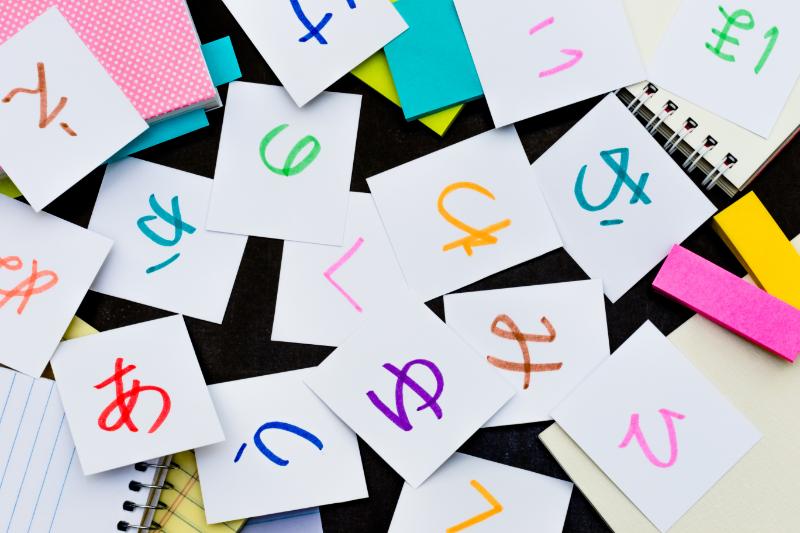
For people with foreign roots living in Japan, the language barrier is one of the biggest hurdles they face. In response to this challenge, "Easy Japanese" (Yasashii Nihongo) is gaining significant attention as a highly effective tool for conveying information clearly to everyone.
This article provides an easy-to-understand overview of what Easy Japanese is, the background behind its creation, where it is used, and how it benefits multicultural coexistence. We will also introduce practical tips you can use in your daily communication.
目次
- 1 What is "Easy Japanese"?
- 2 The Background Behind the Creation of Easy Japanese
- 3 Where is Easy Japanese Used?
- 4 Why Easy Japanese Benefits Multicultural Coexistence
- 5 Key Writing Tips for Easy Japanese
- 6 How to Integrate Easy Japanese Into Daily Life
- 7 Promoting Multicultural Coexistence in Kyotamba Town
- 8 Summary
What is "Easy Japanese"?
Easy Japanese refers to Japanese that has been modified in its writing style and phrasing so that even individuals who are unfamiliar with the language can easily understand it.
Its primary characteristics include avoiding difficult kanji and technical jargon, and keeping sentences short and simple. While it was originally conceived to deliver critical information during disasters, it is now utilized across various sectors, including local government, healthcare, and education.
Today, it is recognized as an essential communication tool for realizing a multicultural society.
The Language Barrier for Residents with Foreign Roots
The Japanese language is often considered difficult for learners because it mixes kanji, hiragana, and katakana, and heavily relies on honorifics (keigo) and ambiguous expressions. In daily life, situations where a lack of understanding causes major difficulties—such as filling out official paperwork at city hall or listening to explanations at a hospital—are not uncommon.
Furthermore, expressions that seem completely natural to native Japanese speakers often fail to convey their intended meaning to those with foreign roots. This "language barrier" can lead to anxiety, insecurity, and social isolation in daily life.
The Difference Between "Easy Japanese" and "Simple Japanese"
Easy Japanese is not just about replacing words with simpler vocabulary.
What sets it apart is that the entire sentence structure and the way information is presented are consciously redesigned to ensure accurate communication. In contrast, "simple Japanese" often stops at basic vocabulary simplification.
For example, when converting the phrase "Please evacuate" (Hinan shite kudasai), simple Japanese might just change it to "Run away" (Nige te kudasai). However, Easy Japanese takes it a step further by adding clear context: "This place is dangerous. Please go to a safe place" (Koko wa abunai desu. Anzen na basho ni itte kudasai).
In Japanese, the word Yasashii carries a dual nuance: both "easy/simple" (易しい) and "kind/kindhearted" (優しい). The defining difference from regular simplification is that it prioritizes the listener's understanding and comfort above all else.
The Background Behind the Creation of Easy Japanese
Easy Japanese was born out of the critical need to deliver accurate information to residents with foreign roots during natural disasters.
With the growing number of foreign residents in Japan, the information gap caused by language differences has become a pressing issue.
In emergency situations, complex Japanese can prevent life-saving information from being understood. Against this backdrop,
Easy Japanese was developed as a universal framework and has since expanded into many aspects of everyday life.
The Turning Point: The Great Hanshin-Awaji Earthquake
The concept traces its roots back to the Great Hanshin-Awaji Earthquake in 1995. During this disaster, many residents with foreign roots could not adequately understand vital announcements, leading to delays in evacuation and access to relief. Because emergency information at the time was broadcasted in complex, highly technical Japanese, it failed to reach those who needed it most.
This painful experience raised national awareness about the necessity of "Japanese that reaches everyone," paving the way for the concept of Easy Japanese.
Growing Prominence Driven by Multicultural Coexistence
In recent years, as local communities across Japan become more diverse, language-related challenges have surfaced more clearly in administrative services, education, and healthcare settings.
Consequently, Easy Japanese is seeing a resurgence of attention as an indispensable tool for ensuring everyone can access information and live safely. A major advantage is that it allows communication to happen in Japanese without relying entirely on foreign language translation, making it a sustainable and widely adopted tool supporting multicultural coexistence.
Where is Easy Japanese Used?
Easy Japanese is not limited to specific situations; it is actively used in various facets of daily life. Let's look at its primary applications across four areas:
- Public Administration & Municipalities
- Disaster Preparedness & Emergency Information
- Schools & Educational Institutions
- Businesses & the Tourism Industry
Public Administration & Municipalities
Local government offices are increasingly adopting Easy Japanese for resident newsletters and procedural guides.
Essential, lifestyle-related documents—such as trash disposal rules, disaster prevention guides, and health checkup notifications—are being redesigned for clarity.
This approach offers a massive advantage for local offices where multilingual support might be limited, as it allows staff to communicate effectively using Japanese.
It is also highly utilized at service counters to ensure smooth, face-to-face communication.
Disaster Preparedness & Emergency Information
In times of crisis, fast and accurate information saves lives. Therefore, Easy Japanese is heavily utilized in evacuation orders and weather warnings, which traditionally contain complex kanji and technical terms.
For instance, Japan's public broadcaster, NHK, features an "Easy Japanese News" service that adds phonetic readings (furigana) over kanji and avoids dense expressions. Keeping sentences short and concrete ensures readability under stress. This initiative vitalizes safety not only for foreign residents, but also for the elderly, children, and people with cognitive disabilities.
Schools & Educational Institutions
In the classroom, Easy Japanese is used to support children who require Japanese language instruction.
Simplifying lesson explanations and school announcements helps these students keep up academically.
Furthermore, it is utilized in handouts sent to parents with foreign roots, facilitating smoother communication between schools and households. It plays an increasingly critical role in creating an inclusive educational environment where every child feels secure.
Businesses & the Tourism Industry
The corporate and tourism sectors leverage Easy Japanese to elevate customer service for international residents and visitors. It is frequently applied to store signs, customer service scripts, and descriptions at tourist spots to lower communication barriers.
In tourism especially, it proves incredibly powerful for Japanese-language learners who may not speak fluent English. Because businesses can assist customers in Japanese without over-relying on translation tools, it serves as a highly practical, ready-to-use method on the ground.
Why Easy Japanese Benefits Multicultural Coexistence
Easy Japanese is a linguistic tool that opens doors for a diverse range of people, not just those with foreign roots. By removing complex language, it fundamentally helps prevent social isolation within the community.
It is Accessible to the Elderly and People with Disabilities
「A great advantage of Easy Japanese is that its benefits extend to elderly Japanese citizens and individuals with disabilities.
Adding furigana to kanji, breaking down dense compound words, and avoiding long text walls drastically improves readability. For those experiencing age-related cognitive decline or visual difficulties, simple phrasing provides immense relief.
It stands as an inclusive linguistic framework that helps everyone access critical information equally.
It Closes the Information Gap
A gap in information access directly impacts an individual's quality of life.
By implementing Easy Japanese, critical updates regarding administrative services, medical care, and disasters can reach a much broader audience.
Closing the information gap is a cornerstone of building an equitable, stress-free society where no one is left behind.
It Fosters an Inclusive Environment for Social Participation
When a community integrates Easy Japanese, language barriers drop, making it significantly easier for diverse residents to participate in local activities, schools, and workplaces. Individuals who previously hesitated to speak up or join in due to language anxieties find the confidence to engage.
A society where everyone can share their views and interact freely is essential for true multicultural coexistence, and Easy Japanese serves as the perfect first step.
Key Writing Tips for Easy Japanese
When practicing Easy Japanese, the golden rule is to always prioritize the reader's perspective. It requires thoughtful adjustments to sentence structure and information delivery.
Here are the core principles anyone can start using today:
Keep Sentences Short
Long sentences pack too much information, causing the reader to lose track of the core message. In Easy Japanese, it is crucial to break sentences down into shorter segments. Instead of cramming multiple points into one sentence, separate them. Keep the subject and verb clear and aligned.
| Example Original:余震(よしん)が起(お)きるおそれもあるため、余震(よしん)に対(たい)して十分(じゅうぶん)に注意(ちゅうい)してください。 (As there is a risk that aftershocks may occur, please exercise sufficient caution against aftershocks.) Easy Japanese:よしん あと く じしん き → 余震(後から 来る 地震)に 気をつけて ください。 (Please be careful of aftershocks [earthquakes that come later].) |
Reference:Guidelines for Easy Japanese
Paraphrase Difficult Words and Technical Jargon
Technical vocabulary and complex Sino-Japanese compound words (kango) are major roadblocks for language learners. Replace them with familiar, everyday words wherever possible.
| Example:記入(きにゅう)します (To fill out) か →書きます (To write) Example:休日 (Day off/Holiday) やす ひ →休みの日 (Rest day) |
Reference:Guidelines for Easy Japanese
If a difficult word is absolutely necessary, add a simple explanation right next to it (like the aftershock example above).
Avoid Ambiguous Expressions
Japanese relies heavily on vague qualifiers like narubeku (as much as possible), kurai (around), or goro (approximately). Because these can be interpreted differently depending on the person, Easy Japanese demands specific metrics to prevent misunderstandings.
Instead of saying "Please come early," write "Please come by 9:00." If you cannot state something with absolute certainty, use the grammatical form ~ka mo shiremasen (might/may), which is taught early on in Japanese language education.
| Example: Original:地震(じしん)が来(く)る可能性(かのうせい)があります (There is a possibility an earthquake will come.) じしん く Easy Japanese:→ 地震が 来る かも しれません (An earthquake might come.) |
Reference:Guidelines for Easy Japanese
The expression "~ka mo shiremasen" is a grammar point that Japanese language learners acquire at a relatively early stage, making it highly effective for clear communication.
Optimize Kanji and Use Furigana
Text dense with kanji can look intimidating and unreadable to non-native speakers. Be mindful of the volume of kanji you use, always provide phonetic guides (furigana), and insert spaces between natural phrase blocks (bunsetsatsu) to make word groupings visually distinct.
Adding visual aids like illustrations or diagrams is also highly recommended to complement the text.
How to Integrate Easy Japanese Into Daily Life

Easy Japanese does not require a special stage; it can be practiced immediately in everyday settings by simply maintaining an awareness of "clear communication."
In Community & Volunteer Activities
Using Easy Japanese on neighborhood bulletin boards, circulation notices, and trash disposal guides ensures information reaches all residents.
For example, writing "moeru gomi" (burnable trash) instead of the technical term "kanen gomi" is highly effective.
When speaking face-to-face at neighborhood events, make an effort to use clear words and speak at a measured, comfortable pace.
In the Workplace
Creating internal regulations, safety guidelines, and operational manuals in Easy Japanese helps international staff fully comprehend their duties.
Combining simple phrasing with diagrams or icons for safety precautions reduces operational mistakes and prevents workplace accidents. Concurrently, it boosts overall workplace productivity by streamlining communication for everyone.
In Schools
For international students or children arriving in Japan, receiving school handouts and schedules in Easy Japanese deepens their understanding of school life.
It empowers them to navigate their education confidently while fostering a reassuring environment where they feel safe communicating.
Promoting Multicultural Coexistence in Kyotamba Town
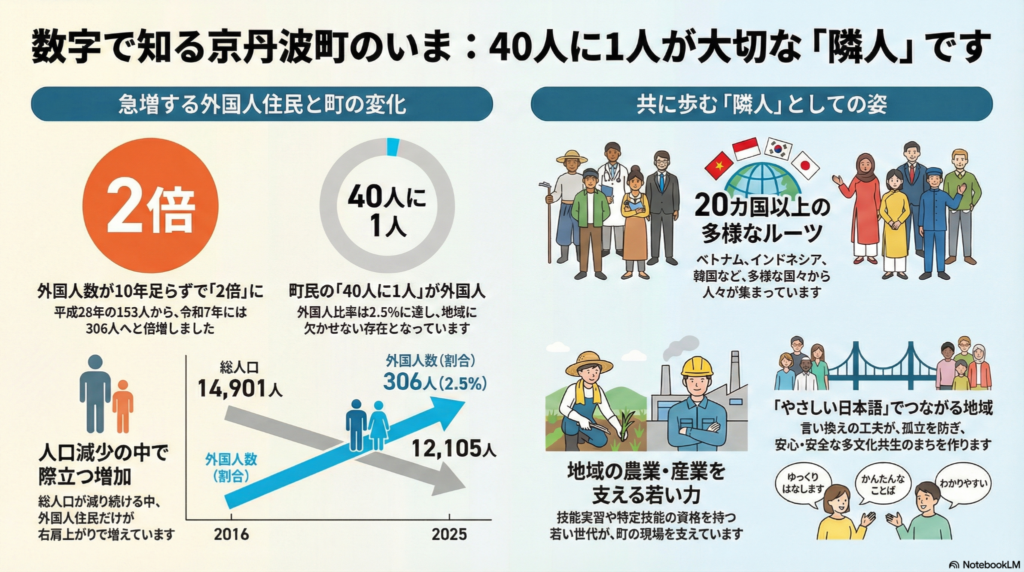
Kyotamba Town in Kyoto Prefecture is actively advancing multicultural coexistence initiatives to build a community where residents of all backgrounds can live together harmoniously.
Out of a total population of 12,105, Kyotamba Town is home to 306 residents with foreign roots (as of December 2025), translating to roughly 1 in 40 residents.
To bridge connections, Kyotamba International Exchange Association offers wide-ranging support, including Japanese language classes, daily life consultations, and cultural exchange programs.
The adoption of Easy Japanese is a pillar of these efforts, ensuring that information from the town is clear and accessible to all.
To learn more about how Kyotamba Town is weaving multicultural coexistence into the fabric of daily life, please visit the official website:
Kyotamba International Exchange Association Official Website
Summary
Easy Japanese is a vital bridge for clear communication that benefits not just residents with foreign roots, but everyone in the community. What started as a lesson learned from disaster response has now blossomed into a framework transforming local administration, education, and workplaces. By keeping a few simple writing tips in mind, anyone can start practicing it today.
Take a look at your immediate surroundings, apply Easy Japanese where you can, and take that rewarding first step toward a truly multicultural society.
関連記事
-
What is "Easy Japanese"? Learn How to Use It to Support Multicultural Coexistence
An easy-to-understand guide to "Easy Japanese" (Yasashii Nihongo). Discover its origins, practical use cases, relationship with multicultural coexistence, and key writing tips. Learn how anyone can practice and integrate Easy Japanese into daily life.
-

How Can We Build a Community Where People from International Backgrounds Can Live Together? A Roadmap and What We Can Do
Learn what multicultural coexistence with people with international backgrounds means, why it matters, and what we can do in our daily lives to build an inclusive community.
-
What Is a Japanese Language Class? An Introduction to What Is Learned and How to Participate as a Volunteer
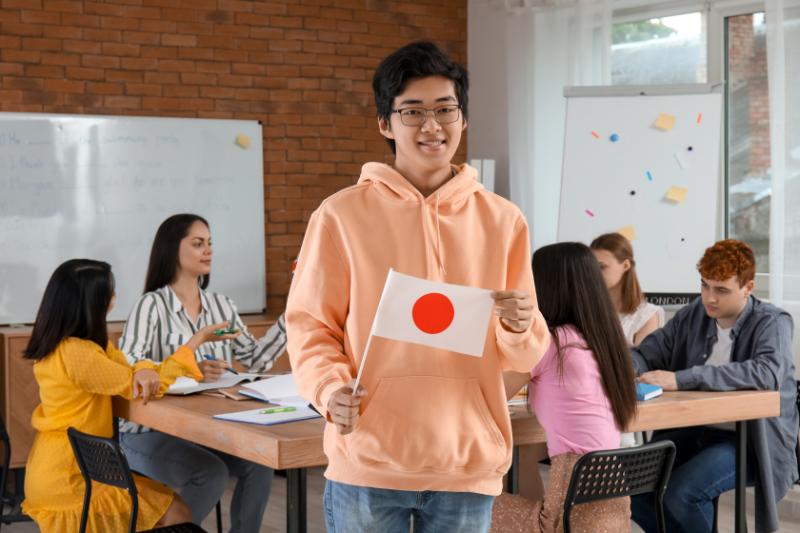
This article explains what Japanese language classes are, what participants learn, the role of Japanese language support volunteers and how to get involved, as well as the Japanese language classes offered by the Kyotamba International Exchange Association.

Click here for our other SNS
-
Facebook

-
X

-
LINE

-
Youtube