


How Can We Build a Community Where People from International Backgrounds Can Live Together? A Roadmap and What We Can Do
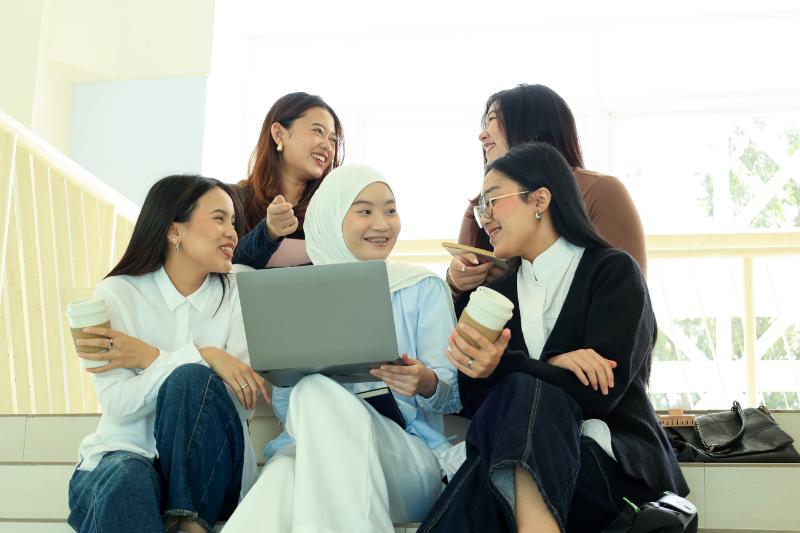
People from international backgrounds who live in our communities are becoming increasingly familiar to us year by year.
Multicultural coexistence has already become part of our daily lives, whether it is seeing people from other countries working at convenience stores and restaurants, children from different backgrounds learning together at school, or families with international backgrounds participating in local events. At the same time, differences in language, culture, and lifestyle may sometimes leave us unsure about how we should interact with one another.
Living together with people from international backgrounds is not something special. It can begin with a willingness to get to know one another and with small actions in our everyday lives.
In this article, we will introduce why living together with foreign residents is becoming increasingly important, the roadmap presented by the Immigration Services Agency of Japan, initiatives being carried out in local communities, and what each of us can do.
目次
- 1 What Does It Mean to Live Together with People from International Backgrounds?
- 2 Why Is Living Together with People from International Backgrounds Becoming Increasingly Important?
- 3 Coexistence with People from International Backgrounds Has Already Begun!
- 4 The Immigration Services Agency of Japan’s Efforts to Build a “Society of Coexistence with Foreign Nationals”
- 5 Initiatives for Coexistence with People from International Backgrounds in Local Communities
- 6 What Can We Do to Live Together with People from International Backgrounds?
- 7 Coexistence with People from International Backgrounds Is Not Difficult
- 8 Kyotamba Town Is Working to Promote Multicultural Coexistence
- 9 Summary
What Does It Mean to Live Together with People from International Backgrounds?
Living together with people from international backgrounds means respecting one another as members of the same community, rather than keeping our distance because of differences in nationality, culture, language, or lifestyle.
As the number of foreign residents living in Japan increases, opportunities to meet them at local schools, workplaces, neighborhood associations, shops, and other places in our daily lives are also becoming more common.
The important thing is not to treat people differently simply because they are different, but to create relationships in which everyone can interact with one another comfortably while recognizing that differences exist. Saying hello, speaking to someone who seems to be having trouble, and using easy-to-understand language are all small everyday actions that can help create coexistence.
Coexistence Is Not Just About “Support”
When we think about living together with foreign residents, many people may think of “support,” such as teaching Japanese or providing information about daily life. Of course, support that helps overcome language and institutional barriers is important. However, coexistence is not simply about “helping” others in a one-sided way.
People from international backgrounds who live in our communities are important members who help build the community together with us. Learning about different cultures and ways of thinking can also bring new perspectives and connections to a community. This way of thinking is known as “multicultural coexistence,” which aims to create a society where people of different nationalities and ethnic backgrounds recognize each other’s cultural differences and live together while building equal relationships.
For more information about multicultural coexistence, please see the following article.
Why Is Multicultural Coexistence Important?
Why Is Living Together with People from International Backgrounds Becoming Increasingly Important?
The growing importance of living together with people from international backgrounds reflects changes taking place in Japanese society. People from international backgrounds are increasing throughout Japan, including those who work, study, and live with their families, and opportunities to interact with them as members of local communities are becoming more common.
Here are some of the reasons why living together with people from international backgrounds is becoming increasingly important.
Because the Number of People from International Backgrounds Living in Japan Is Increasing
The number of people from international backgrounds living in Japan has been increasing year by year. People come to Japan for various reasons, including work, study, and living with family members. As a result, opportunities to meet them at local workplaces, schools, shops, neighborhood associations, and other places are increasing.
In particular, in fields facing serious labor shortages, people from international backgrounds play an important role in supporting local industries as part of the workforce. In addition, the introduction of new cultures and values can bring greater diversity to areas such as food, exchange events, education, and tourism, which can contribute to local revitalization.
For this reason, it is important not simply to see the number of foreign residents as “increasing,” but to build relationships with them as people who are working together to create our communities.
Because Local Communities Are Becoming More Diverse
Local communities are increasingly home to people with diverse backgrounds in terms of nationality, language, religion, food culture, family structures, and more. For example, information necessary for daily life, such as garbage disposal rules, school notices, and evacuation information during disasters, may not always reach everyone sufficiently depending on how it is communicated.
As society becomes more diverse, we need to avoid assuming that people will understand something simply because “it is common knowledge in Japan.” We need to find ways to communicate information that everyone can understand. Speaking in easy-to-understand language, providing multilingual information, and avoiding dismissive attitudes toward cultural differences can help build a sense of security and trust within the community.
Because It Leads to a Community Where Everyone Can Live Comfortably
Promoting coexistence with people from international backgrounds is not only for foreign residents. As mentioned above, communicating information in easy-to-understand language can also be helpful to children, older people, and people with disabilities.
Having places where people can easily ask for help when they are in trouble, relationships where neighbors can greet one another, and systems that ensure no one is left behind during a disaster all contribute to a sense of security for every resident. Multicultural coexistence is not a special initiative. It is an important way of creating a society where everyone is respected and can live in their own way as part of the local community.
Coexistence with People from International Backgrounds Has Already Begun!
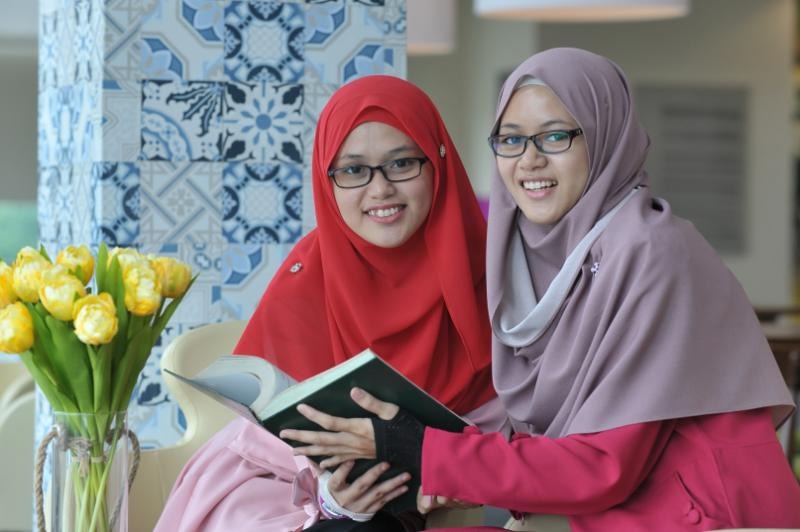
When we hear about coexistence with people from international backgrounds, we may imagine special systems or large-scale initiatives. In reality, however, it has already begun in many familiar aspects of our daily lives.
Examples of coexistence with people from international backgrounds that have become part of everyday life include:
- Seeing foreign residents working at convenience stores and restaurants
- Seeing local notices written in “Plain Japanese”
- Schools and local communities becoming more multicultural
Let’s take a closer look at each of these examples.
Seeing Foreign Residents Working at Convenience Stores and Restaurants
It is no longer unusual to see people from international backgrounds working at convenience stores, restaurants, supermarkets, factories, nursing care facilities, and other workplaces.
The shops and services we use every day are sometimes supported by the work of these people. When we notice that someone speaks a little differently or has an international background based on their name, it is important to interact with them warmly and respectfully.
Small actions, such as speaking slowly and expressing our gratitude, can help workers feel more comfortable. Everyday places such as shops and restaurants can also provide opportunities for multicultural coexistence.
Seeing Local Notices Written in “Plain Japanese”
There are also more situations in which municipalities and local organizations use “Plain Japanese” in their notices. “Plain Japanese” means Japanese that avoids difficult words and complicated expressions and communicates information in a short and easy-to-understand way. The word “yasashii” in “Yasashii Nihongo” carries both the meaning of being “simple and easy to understand” and the meaning of being “kind and considerate.”
For example, you may have seen signs at train stations saying things such as “Please do not stop here” in simple Japanese.
In addition, there are many situations in which disaster prevention information, garbage disposal rules, event information, and notices about procedures are provided in “Plain Japanese.”
The effort to communicate information clearly to everyone is itself an important part of creating a community where no one is left behind.
For more information about “Plain Japanese,” please see the following article.
What is "Easy Japanese"? Learn How to Use It to Support Multicultural Coexistence
Schools and Local Communities Are Becoming More Multicultural
Schools and local communities are also gradually becoming more multicultural. When children from international backgrounds learn in the same classrooms and foreign residents participate in local events, people have more opportunities to experience different cultures as part of everyday life.
Learning about differences in language, food, events, and family customs can be an opportunity for both children and adults to broaden their perspectives. There may be some uncertainty at first, but relationships gradually deepen through simple actions such as greeting one another and participating in activities together. The growing diversity of local communities is also an opportunity to get to know and learn from one another.
The Immigration Services Agency of Japan’s Efforts to Build a “Society of Coexistence with Foreign Nationals”
The Immigration Services Agency of Japan has developed the “Roadmap for the Realization of a Society of Coexistence with Foreign Nationals” and is promoting the development of a society of coexistence through efforts across the Japanese government.
This roadmap summarizes the vision of a society in which Japan aims to coexist with foreign residents, the medium- and long-term challenges that need to be addressed to achieve this vision, and specific measures to be taken.
The roadmap is based on the idea that foreign residents should not simply be seen as people who receive “support,” but as members of society who will help build the future of Japan together with others. It emphasizes creating an environment where everyone can participate safely and comfortably in various aspects of life, including Japanese-language education, consultation services, childcare and education, employment, disaster preparedness, and community development.
Here, we introduce the “Three Visions” and “Four Priority Areas” presented in the Immigration Services Agency of Japan’s “Roadmap for the Realization of a Society of Coexistence with Foreign Nationals.”
Three Visions
The roadmap presents three visions for the society of coexistence with foreign residents that Japan should aim to achieve.
- A “Safe and Secure Society”
A society in which foreign residents are welcomed as members who contribute to building the future of Japanese society together, and where everyone can live safely and securely.
- A “Diverse and Vibrant Society”
A diverse and vibrant society in which everyone, including people from various backgrounds, can participate in society and make the most of their abilities.
- A “Society that Respects Individual Dignity and Human Rights”
A society in which everyone, including foreign residents, respects one another’s individual dignity and human rights and can live without discrimination or prejudice.
These can be seen as principles for creating a society that is comfortable for all residents, regardless of nationality or background.
Four Priority Areas
The roadmap identifies four priority areas as medium- and long-term challenges that need to be addressed in order to achieve the three visions.
- Efforts such as Japanese-language education to facilitate smooth communication and social participation
- Strengthening information dissemination to foreign residents and consultation services for foreign residents
- Support according to different life stages and life cycles
- Efforts to develop the foundations for a society of coexistence
These are important pillars not only for enabling foreign residents to live safely and comfortably, but also for creating an environment in which the entire community can support one another and everyone can participate more easily in society.
Initiatives for Coexistence with People from International Backgrounds in Local Communities
Coexistence with people from international backgrounds is gradually being promoted not only by the national and local governments but also within local communities. These efforts take many forms, including creating opportunities to learn Japanese, organizing events where residents can interact with one another, providing multilingual information necessary for daily life, and establishing consultation services where people can seek help when they are in need.
Here, we introduce initiatives for coexistence with people from international backgrounds taking place in local communities.
Holding Japanese Language Classes
Japanese language classes held in local communities are important places where people from international backgrounds can learn to live safely and comfortably in Japan. By learning Japanese together with support volunteers, they can expand what they are able to do in daily life, such as shopping, visiting hospitals, completing procedures at government offices, and communicating with schools. Japanese language classes are also more than places to learn a language. They can serve as places for people to meet members of the local community, discuss concerns about daily life, and learn about local rules.
Another major attraction is that these classes are not simply one-way relationships in which one side teaches and the other learns. They also provide opportunities for people to learn about each other’s cultures and ways of thinking.
For more information about local Japanese language classes, please see the following article.
What is a Local Japanese Language Class? From Learning Content to Volunteer Opportunities
Holding International Exchange Events
International exchange events provide opportunities for people from international backgrounds and local residents to meet naturally and get to know one another. By experiencing different cultures through cooking, music, dance, traditional events, sports, games, and other activities, feelings of anxiety caused by not knowing someone or something can be eased, making it easier to develop a sense of familiarity and connection.
Meeting someone at an event can also lead to everyday greetings and conversations. There is no need to think of coexistence as something difficult. Having fun together and showing an interest in another person’s culture are important first steps toward building relationships of trust within the community.
Providing Multilingual Disaster Prevention and Medical Information
In times of disaster or illness and injury, understanding accurate information can help protect lives and provide peace of mind. However, when someone does not understand Japanese well enough, it may be difficult to understand evacuation locations, warnings, or how to receive medical care.
For this reason, it is important to provide disaster prevention maps, evacuation information, medical facility information, and notices about infectious diseases in multiple languages or in “Plain Japanese.” Communicating necessary information clearly to everyone is useful not only for people from international backgrounds but also for children and older people.
Establishing Consultation Services for People from International Backgrounds
People from international backgrounds may face various concerns while living in a local community, including matters related to residence procedures, work, childcare, education, medical care, housing, and relationships with neighbors. Having a place where they can seek advice when they are facing difficulties makes it easier for them to connect with the support they need instead of dealing with problems alone.
Consultation services are useful not only for resolving the problems faced by foreign residents but also for identifying issues within the community and creating systems that make the community easier to live in. Knowing that there is somewhere to turn when problems arise can provide significant support for living safely and comfortably in the community.
For more information about actual initiatives for multicultural coexistence, please see the following article.
Introducing 10 Case Studies of Multicultural Coexistence Initiatives
What Can We Do to Live Together with People from International Backgrounds?
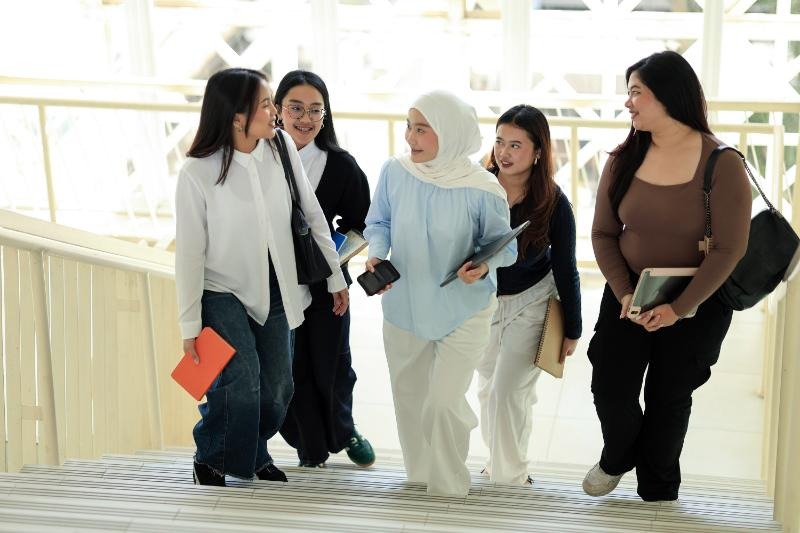
Coexistence with people from international backgrounds does not require special knowledge or major actions to get started. What is important is not to lump people together simply as “foreigners,” but to interact with each person as an individual resident living in the same community.
Here, we introduce things that we can do to promote multicultural coexistence.
First, Try to Learn About Different Cultures
The first step toward coexistence is having an attitude of wanting to learn about different cultures and values.
Food customs, religion, ways of greeting, relationships with family members, and many other things that people consider important vary from country to country and from region to region.
Something that seems normal to us may not be normal to someone else. That is why it is important not to dismiss something as “strange” simply because it is different, but to accept it by thinking, “That is another way of thinking.” Learning about differences not only helps us understand others, but can also give us an opportunity to reconsider our own lifestyles and communities.
Ask If Someone Is Having Trouble in Their Daily Life
People from international backgrounds may experience difficulties in their daily lives because of differences in language or systems, yet they may not know who they can ask for help.
If you notice someone from an international background who seems to be having trouble, simply asking, “Is there anything I can help you with?” can help them feel more at ease. There is no need to get too deeply involved. It is important to respect the other person’s feelings while building relationships in which people can support one another when necessary.
Participate in Local International Exchange Activities
Participating in international exchange events, Japanese language classes, and volunteer activities in your community is another important step toward coexistence. At events such as cooking experiences, cultural introductions, and exchange gatherings, you can meet people from international backgrounds and get to know one another while having fun. Supporting Japanese language classes and helping to provide daily-life information can also support people from international backgrounds in living safely and comfortably in the community.
Simply attending an event as an observer is enough to begin with. As opportunities to meet face-to-face and talk with one another increase, natural connections begin to develop within the community. Coexistence can begin by getting involved in familiar local activities.
Coexistence with People from International Backgrounds Is Not Difficult
When people hear about coexistence with people from international backgrounds, some may think that specialized knowledge or special skills are necessary. However, coexistence begins with small actions that can be taken in our everyday lives.
When we encounter differences in culture or customs, instead of immediately rejecting them, becoming curious and asking ourselves, “Why do they do things that way?” can deepen our understanding of others. What matters is not trying to respond perfectly, but having an attitude of engaging with others as fellow members of the same community. When the small actions of each individual come together, they help create a local community where everyone can live safely and comfortably.
Kyotamba Town Is Working to Promote Multicultural Coexistence
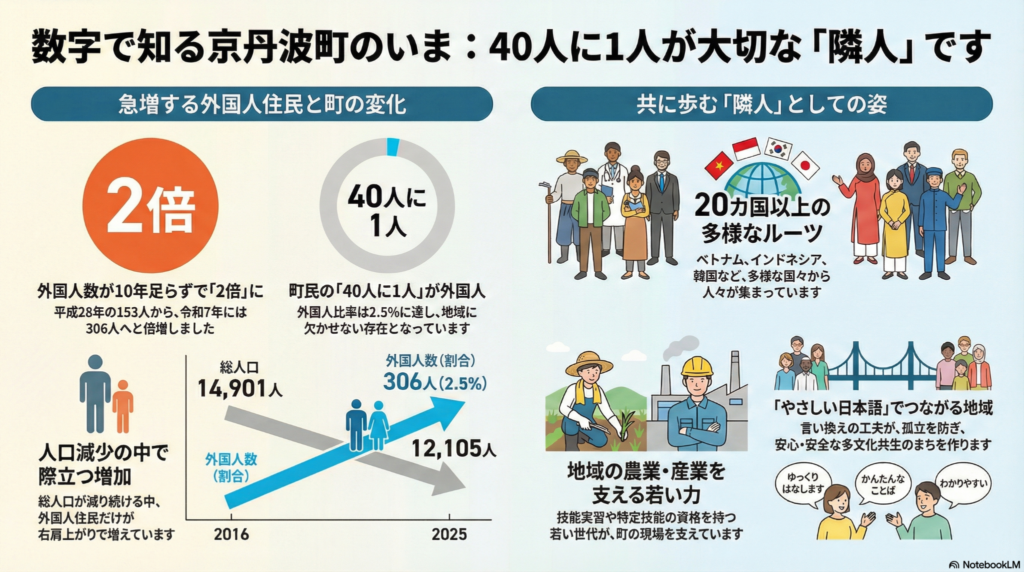
In Kyotamba Town, efforts are being made to create a community where people from international backgrounds and Japanese residents recognize and respect one another and can live together safely and comfortably. One such effort is the multicultural coexistence support provided by the Kyotamba International Exchange Association.
Our association supports connections among people living in the community through activities such as operating Japanese language classes, organizing international exchange activities, and providing necessary information to foreign residents. Japanese language classes are not only places where people from international backgrounds can learn Japanese, but also places where they can meet Japanese residents and seek advice about daily life. On our website, we also make efforts to provide information in Plain Japanese and multiple languages.
These initiatives contribute not only to supporting people from international backgrounds but also to creating a community where everyone can live safely and comfortably.
For more information, please visit our official website.
Kyotamba International Exchange Association — Official Website
Summary
Living together with people from international backgrounds begins when residents living in the same community respect one another, regardless of differences in nationality, culture, or language.
As the number of people from international backgrounds living in Japan increases, the diversity of local communities will continue to grow. The Immigration Services Agency of Japan’s roadmap also sets out the realization of a safe and secure society, a diverse and vibrant society, and a society that respects individual dignity and human rights. Coexistence is by no means something difficult.
Small everyday actions are important, such as saying hello, communicating in easy-to-understand language, speaking to someone who appears to be having trouble, and participating in local international exchange activities. When each of us accepts differences and makes an effort to get to know others, we can move closer to creating a local community where everyone can live safely and comfortably.
関連記事
-

Why Is Multicultural Coexistence Important?
Explaining the benefits of multicultural coexistence based on Japan's current situation, including declining birth rates, an ageing population, and the increase in foreign-born workers. We also introduce Kyoto Prefecture's multicultural initiatives and actions that can be taken locally.
-
What Can You Do for Multicultural Coexistence? Practical Local Examples
How can you support multicultural coexistence? Discover simple, practical steps you can take today—from greeting your neighbors and using "Easy Japanese" to joining local community activities. We also highlight specific initiatives in Kyotamba Town.
-

Introducing 10 Case Studies of Multicultural Coexistence Initiatives
Discover 10 real-world examples of multicultural coexistence, from language support and disaster preparedness to healthcare and local exchange. Also introduces initiatives in Kyotamba, Kyoto.

Click here for our other SNS
-
Facebook

-
X

-
LINE

-
Youtube