


An Introduction to Diversity: Understanding It Through Everyday Examples

The word "diversity" is becoming increasingly common in our daily lives. From corporate initiatives and school education to local community activities, its importance is highlighted in various settings. Yet, many people might still wonder, "What does it actually mean?" or "How does it affect my own life?"
In reality, diversity is not something extraordinary; it is already woven into our everyday routines.
This article provides an easy-to-understand introduction to the meaning and significance of diversity by looking at relatable examples from our communities, schools, workplaces, and daily lives.
目次
What is Diversity?
Diversity refers to acknowledging, respecting, and valuing individual differences, including age, gender, nationality, culture, values, and work styles.
While there was a time when "being the same as everyone else" was highly prioritized, society is shifting toward the belief that leveraging each person’s unique individuality and background strengthens both communities and businesses. Diversity is not a niche concept—it is a familiar, everyday theme already present in our homes and local neighborhoods.
Why is Diversity Highly Valued Now?
The growing emphasis on diversity is driven by major social shifts, such as an aging population, declining birthrates, and globalization.
In Japan, where the working-age population is shrinking, creating environments where diverse talents—including foreign residents, senior citizens, and women—can thrive is essential. Furthermore, the rise of social media has made it easier to encounter global lifestyles and values, fostering a widespread understanding that "it is natural for everyone to be different."
Acknowledging and respecting differences has become a standard expectation in modern society.
Diversity is Already All Around Us
While "diversity" might sound like a grand academic concept, it is a living reality in our immediate surroundings.
For example, seeing international tourists in your town or working alongside colleagues with foreign roots are clear representations of diversity. The expansion of flexible work options, such as remote work and shorter working hours, also reflects this growing trend.
Below, we explore concrete examples of diversity across school, community, and business environments.
Diversity in Local Communities
Our local communities showcase diversity through initiatives designed to make life accessible and welcoming for everyone. Key examples include:
- Multilingual Communication Support
- Barrier-Free Public Facilities
- Culturally and Religiously Inclusive Services
By learning about these things, we can see that diversity is already a natural part of our everyday lives.
Multilingual Communication Support
It is increasingly common to see information boards and signs written in English, Chinese, Korean, and "Easy Japanese" (Yasashii Nihongo) at train stations, city halls, hospitals, and tourist destinations. This support ensures that foreign residents and tourists can navigate their daily lives safely.
Importantly, "Easy Japanese" benefits not only language learners but also the elderly, children, and people with disabilities. Lowering language barriers makes vital information accessible to all, representing a key step in welcoming diverse residents into the community.
Related Article: What is "Easy Japanese"? Learn How to Use It to Support Multicultural Coexistence
Barrier-Free Public Facilities
The installation of ramps, elevators, and multi-purpose toilets in public spaces is another vital aspect of diversity. These facilities ensure that seniors, wheelchair users, and parents with strollers can move about with ease.
With tactile paving and voice guidance also expanding, barrier-free design is recognized not as a special accommodation for a select few, but as an essential standard for creating an inclusive society.
Culturally and Religiously Inclusive Services
Services tailored to different religious and cultural needs are on the rise. Examples include restaurants serving "Halal-certified" meals for Muslim patrons and public facilities providing dedicated prayer spaces.
Understanding and respecting diverse food cultures and lifestyle habits is crucial—not just for welcoming tourists, but also for ensuring that diverse long-term residents can live comfortably in Japan.
Diversity in Schools
Schools are places where children with unique personalities and backgrounds gather. Embracing diversity in education is vital for fostering mutual respect from an early age.
- Rethinking Gender-Segregated Rules
- Supporting Students with Foreign Roots
- Tailored Learning Styles and Special Needs Support
Let’s take a closer look at some familiar examples of diversity already being embraced in schools.
Rethinking Gender-Segregated Rules
Many schools are actively reviewing traditional rules that separate students by gender. For instance, an increasing number of schools are adopting gender-mixed class rosters sorted alphabetically, and introducing flexible uniform policies that allow students to choose their attire regardless of gender.
By challenging old norms, schools are creating environments where every student can feel comfortable being themselves.
Supporting Students with Foreign Roots
As the number of children with foreign roots in Japanese schools grows, educational institutions are providing tailored Japanese language instruction and translating school notices into multiple languages.
Some schools also introduce cultural exchange opportunities, such as "Halal school lunch experiences," helping children naturally understand and respect different traditions. Learning alongside peers from diverse backgrounds offers a firsthand experience in multicultural coexistence.
Tailored Learning Styles and Special Needs Support
Every child learns differently and possesses unique developmental traits. Today, schools are increasingly utilizing tablets to match individual learning paces and offering specialized classrooms for focused, one-on-one instruction.
Rather than forcing everyone to learn in the exact same way, modern education seeks to understand each child's strengths and provide the right support to help them thrive.
Diversity in the Workplace
For modern businesses, cultivating a diverse workplace is key to unlocking potential. Companies are striving to build environments where employees can perform at their best, regardless of gender, nationality, or age.
- Promoting Women in Leadership
- Active Hiring and Retention of Minority Talents
- Collaborating with International Colleagues
Promoting Women in Leadership
While management roles were traditionally dominated by men, women are increasingly stepping into leadership positions. Many companies now offer robust support systems to help employees balance career growth with childcare or family caregiving.
Increasing female representation in leadership brings fresh perspectives to the table, driving flexible work styles and innovation.
Active Hiring and Retention of Minority Talents
Companies are working to create secure environments for marginalized groups, including persons with disabilities and LGBTQ+ individuals. This includes installing gender-neutral restrooms, conducting company-wide inclusivity training, and establishing dedicated internal counseling desks.
Ensuring fair evaluation systems free from unconscious bias builds a sense of security and trust, elevating the entire workplace culture.
Collaborating with International Colleagues
Working alongside international colleagues has become common in Japanese companies. While differences in language, culture, and communication styles exist, building success depends on mutual understanding.
Many businesses now prepare multilingual manuals and actively train their staff to use "Easy Japanese." Collaborating with international talent broadens horizons, bringing diverse worldviews into local industries.
Diversity in Our Daily Lives

Beyond schools and offices, diversity naturally influences our everyday choices—from the shops we visit to the foods we eat and the fashion we wear.
- Multinational Staff at Local Conveniences and Restaurants
- Diverse Food Choices
- Freedom of Fashion and Gender Expression
Multinational Staff at Local Conveniences and Restaurants
It is common to be served by staff with foreign roots at convenience stores, supermarkets, and restaurants. Many of these employees speak multiple languages, playing a crucial role in supporting local daily life.
This multinational presence fosters organic, everyday intercultural communication and understanding.
Diverse Food Choices
Food products and dining options are diversifying to accommodate various values and dietary needs.
This is evident in the rise of vegan options that exclude animal products, allergen-free menus at restaurants, and products labeled for specific religious observances. Moving away from the assumption that "everyone eats the same thing" reflects deep respect for individual backgrounds.
Freedom of Fashion and Gender Expression
Society has become highly supportive of self-expression through fashion, regardless of traditional gender roles. Genderless fashion and cosmetics for all genders are now widely accepted.
Moving away from rigid stereotypes like "what a man/woman should wear" allows individuals to choose styles they feel comfortable in, symbolizing a society that respects diverse identities.
How Diversity Transforms Our Society
Embracing diversity is not about making concessions for a specific group; it is about building a better society that benefits everyone.
- Spurring Innovation and New Ideas:
When people with different experiences and worldviews come together, they analyze challenges from multiple angles. In business, this leads to the creation of innovative products, while in local communities, it sparks fresh ways to connect.
- Creating an Accessible Society for All:
Accommodations like elevators, barrier-free access, and simplified language notices are useful for everyone. An elevator helps a wheelchair user, but it also helps an elderly citizen, a parent with a stroller, or someone carrying heavy luggage.
- Fostering Empathy and Mutual Respect:
Interacting with different cultures and ideas helps us realize that "everyone is unique." This reduces prejudice, prevents misunderstandings, and forms the foundation of a harmonious community.
Steps We Can Take to Embrace Diversity

Building an inclusive society does not require grand actions or specialized knowledge. It starts with small adjustments in our daily lives:
- Avoid Dismissing Differences:
It is natural for values and lifestyles to differ. What is "obvious" to you might not be to someone else. Instead of rejecting differences outright, try adopting the mindset of "that is a unique and valid perspective too."
- Imagine the Other Person's Background:
A person's actions and words are shaped by their experiences, culture, and lifestyle. Pausing to consider the background of others reduces friction and paves the way for constructive communication.
- Practice Small Acts of Consideration:
Using Easy Japanese, offering help to someone who looks lost, or ensuring multiple options are available in group settings are powerful contributions. Cultivating diversity starts with these quiet, everyday acts of kindness.
"Multicultural Coexistence" as a Pillar of Diversity
When discussing diversity, multicultural coexistence (Tabunka Kyosei) is an essential element.
It refers to people of different nationalities, cultures, and languages living together in a community while understanding and respecting one another. Rather than viewing cultural differences as "walls," embracing them as opportunities for learning and connection is vital for a flourishing, diverse society.
Related Article: Introducing 10 Case Studies of Multicultural Coexistence Initiatives
Supporting Multicultural Coexistence in Kyotamba Town
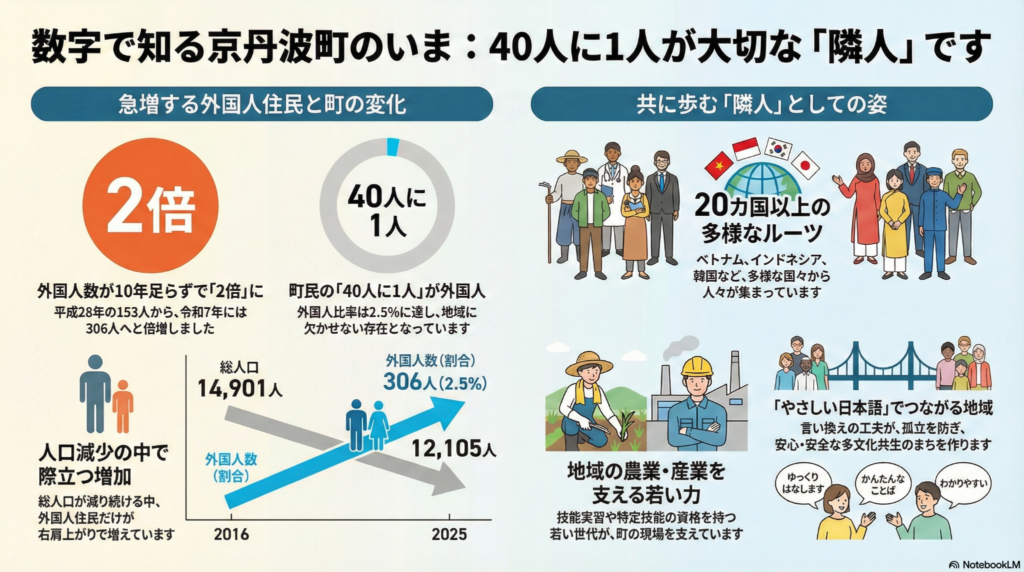
In Kyotamba Town, Kyoto Prefecture, where the total population is 12,105, there are 306 residents with foreign roots (as of December 2025). This means approximately 1 in 40 residents has an international background.
Among these 306 residents, Vietnamese nationals make up the largest group, followed by Indonesian and Korean nationals.
To ensure that both Japanese and foreign-born residents can live with peace of mind, Kyotamba Town is actively driving multicultural coexistence forward. Through grassroots efforts such as volunteer-run Japanese language classes, local exchange events, and disaster safety training, the town is building an environment where everyone can participate as a valued member of the community.
For more information on these local efforts, please visit our official website:
Kyotamba International Exchange Association Official Website
Summary
Diversity is the practice of recognizing and respecting each other’s differences—be it age, gender, nationality, culture, values, or work styles. Initiatives reflecting this mindset are already functioning all around us.
Multicultural coexistence is a vital branch of this inclusive philosophy. By starting with the simple step of "getting to know our differences," we directly contribute to a safe, welcoming, and resilient community for all.
関連記事
-
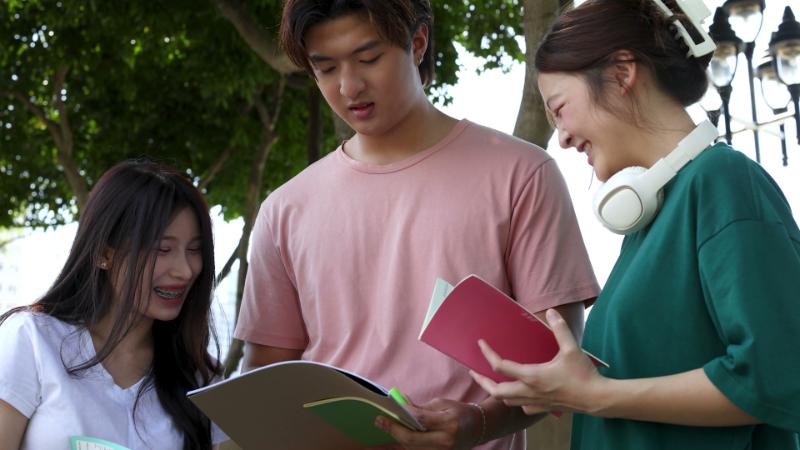
What Is Disaster Preparedness for Residents with Foreign Roots? Explaining Community Support and Preparation for Disasters
Learn about the challenges that residents with foreign roots may face during disasters, as well as ways communities can provide support, including disaster preparedness drills, multilingual communication, and the use of Easy Japanese. Through disaster preparedness that leaves no one behind, let us consider how we can build an inclusive, multicultural community.
-
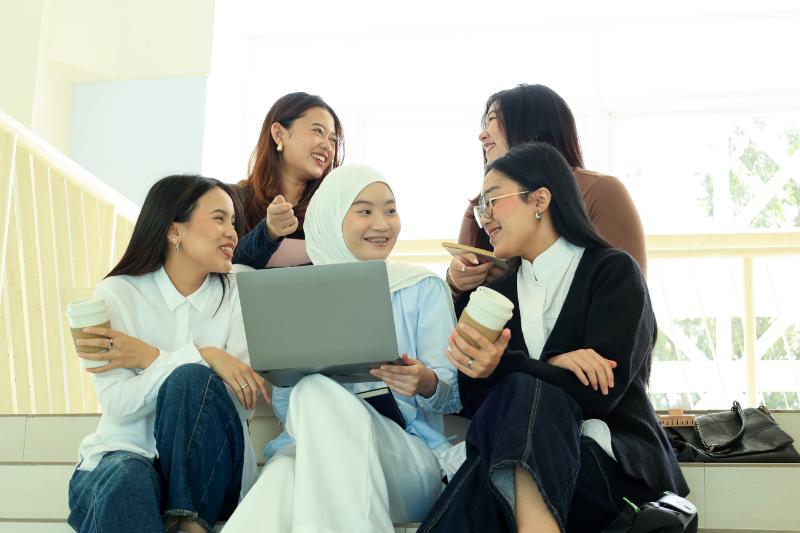
How Can We Build a Community Where People from International Backgrounds Can Live Together? A Roadmap and What We Can Do
Learn what multicultural coexistence with people with international backgrounds means, why it matters, and what we can do in our daily lives to build an inclusive community.
-

What is "Easy Japanese"? Learn How to Use It to Support Multicultural Coexistence
An easy-to-understand guide to "Easy Japanese" (Yasashii Nihongo). Discover its origins, practical use cases, relationship with multicultural coexistence, and key writing tips. Learn how anyone can practice and integrate Easy Japanese into daily life.

Click here for our other SNS
-
Facebook

-
X

-
LINE

-
Youtube